
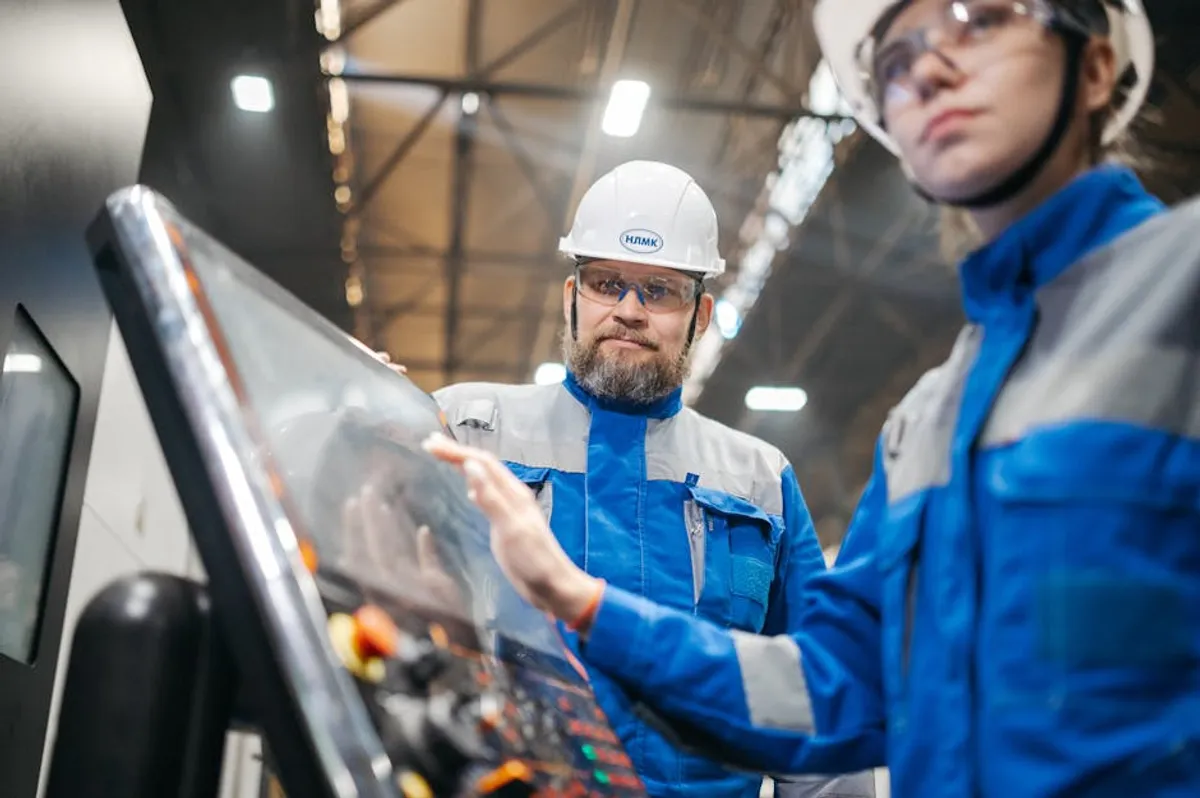
Navigating the landscape of industrial safety requires a meticulous approach, particularly for buyers tasked with procuring solutions that protect personnel and assets. The decision extends beyond mere product specifications; it encompasses a comprehensive evaluation of systems, protocols, and cultural integration. A robust industrial safety strategy minimizes operational risks, ensures regulatory compliance, and contributes directly to workforce productivity and retention. This guide outlines critical topics every buyer should scrutinize to make informed, impactful safety investments.
Risk Assessment and Compliance Foundations
The bedrock of any effective industrial safety program is a thorough understanding of inherent risks and the regulatory framework governing operations. Buyers must confirm that any proposed safety solution or system aligns precisely with these foundational elements. A failure in this area exposes the organization to legal penalties, operational shutdowns, and severe reputational damage.
Regulatory Standards (OSHA, ANSI, ISO)
Buyers must verify that prospective safety equipment, services, and training programs meet or exceed all applicable federal, state, and local regulations. For instance, in the United States, OSHA (Occupational Safety and Health Administration) standards are non-negotiable. Beyond mandatory compliance, adherence to voluntary consensus standards like ANSI (American National Standards Institute) for product design and performance, or ISO (International Organization for Standardization) for quality and environmental management, often signifies a higher commitment to safety best practices and can provide a competitive edge in risk mitigation.
Key Review Point: Request documentation proving compliance and certification from vendors. Understand the specific standards each product or service addresses.
Site-Specific Hazard Identification
Generic safety solutions rarely suffice. A buyer’s review process must include an assessment of how well a vendor or product addresses the unique hazards present at their specific industrial sites. This involves understanding the nature of machinery, chemical exposures, working at heights, confined spaces, and environmental factors. A solution that excels in one industrial setting may be inadequate or even counterproductive in another due to differing operational contexts.
Actionable Step: Prioritize vendors who demonstrate a capability for site-specific hazard analysis or whose products are inherently adaptable to diverse risk profiles.
Personal Protective Equipment (PPE) Selection and Management
PPE serves as the last line of defense against many industrial hazards. Its selection is not merely about purchasing items but integrating them into a comprehensive system that ensures their effectiveness and proper use.
Fit, Function, and Certification
The efficacy of PPE hinges on its appropriate fit for individual workers and its functional capability to protect against identified hazards. Buyers must evaluate the range of sizes, ergonomic considerations, and compatibility with other necessary equipment. Certification from recognized bodies (e.g., NIOSH for respirators, ANSI for eye protection) provides an objective measure of performance and reliability. Without proper fit, even certified PPE can fail to provide adequate protection.
Buyer Focus: Assess vendor offerings for a wide range of sizes and configurations. Inquire about trial programs to test fit and comfort with actual workers.
Training and Maintenance Protocols
Purchasing PPE without corresponding training and maintenance protocols is a critical oversight. Workers must understand:
- When PPE is required
- What type of PPE is necessary
- How to properly don, doff, adjust, and wear PPE
- The limitations of the PPE
- Proper care, maintenance, useful life, and disposal of PPE
Buyers should look for vendors who offer training support or provide clear, comprehensive instructions for use and maintenance. The longevity and protective capacity of PPE are directly tied to these protocols.
Machine Guarding and Lockout/Tagout (LOTO) Procedures
Preventing contact with moving machinery parts and controlling hazardous energy are paramount in industrial environments. These areas demand rigorous attention to detail and robust procedural implementation.
Point-of-Operation Safeguards
Machine guarding solutions must effectively prevent operators from reaching into hazardous areas during machine operation. Buyers need to evaluate the design of guards for durability, interference with production, and ease of maintenance. Fixed guards, interlocked guards, adjustable guards, and self-adjusting guards each have specific applications. The choice impacts both safety and operational efficiency.
Energy Control Programs
Lockout/Tagout (LOTO) procedures are critical for preventing accidental machinery startup or release of stored energy during maintenance or servicing. Buyers should assess how potential LOTO solutions integrate with existing machinery and operational workflows. This includes evaluating the quality and types of energy isolating devices, locks, tags, and the comprehensiveness of associated training materials. A robust LOTO program depends as much on the hardware as on the procedural discipline it instills.
Pro Tip: When evaluating LOTO solutions, prioritize systems that offer clear visual indicators of energy isolation and are designed for intuitive, unambiguous application. A complex or poorly designed LOTO system significantly increases the risk of human error, potentially negating its protective intent.
Emergency Preparedness and Response
Even with the most stringent preventative measures, incidents can occur. A buyer’s strategy must include a review of solutions that facilitate rapid and effective emergency response.
Evacuation Plans and Assembly Points
Effective emergency planning involves clear, visible evacuation routes, designated assembly points, and communication systems to account for all personnel. Buyers should consider systems for emergency lighting, signage, and mass notification that are durable, reliable, and easily maintained, especially in harsh industrial conditions.
First Aid and Medical Response Capabilities
Access to immediate medical attention can significantly mitigate the severity of injuries. This includes evaluating the placement and contents of first aid stations, the availability of AEDs (Automated External Defibrillators), and the training of personnel in emergency medical response. Solutions for chemical spill response, eye wash stations, and emergency showers must also be assessed for accessibility, functionality, and compliance with standards like ANSI Z358.1.
Ergonomics and Workplace Design
Addressing ergonomic risks prevents musculoskeletal disorders (MSDs), which are among the most common and costly workplace injuries. Buyers should seek solutions that integrate ergonomic principles into the work environment.
Injury Prevention Through Design
This involves evaluating workstations, tools, and material handling equipment for designs that reduce physical strain. Solutions might include adjustable work surfaces, ergonomic tools, lifting aids, and anti-fatigue matting. The goal is to match the job to the worker, not the other way around, minimizing awkward postures, repetitive motions, and excessive force requirements.
Training for Proper Body Mechanics
Even with optimal design, training on proper lifting techniques, posture, and body mechanics remains crucial. Buyers should look for training programs that are practical, interactive, and tailored to the specific tasks performed in their facility, reinforcing the benefits of ergonomic considerations.
Safety Training and Culture Development
Safety is not solely about equipment; it is fundamentally about human behavior and organizational culture. Buyers must invest in solutions that foster a proactive safety mindset.
Continuous Education Programs
Effective safety training is ongoing, not a one-time event. Buyers should evaluate vendors who offer modular, customizable training programs that can be regularly updated and delivered in various formats (e.g., online, in-person, hands-on). This includes specialized training for new hires, contractors, and specific hazard exposures.
Leadership Commitment and Employee Engagement
A strong safety culture is driven from the top down and supported from the bottom up. Buyers should consider how proposed safety initiatives facilitate leadership involvement and actively engage employees in identifying hazards and suggesting improvements. Solutions that include mechanisms for anonymous reporting, safety committees, and recognition programs can significantly enhance engagement.
Data-Driven Safety Performance
To continuously improve safety, organizations must measure and analyze their performance. Buyers need systems that provide actionable insights.
Incident Reporting and Analysis
Robust systems for reporting near misses, incidents, and injuries are essential. Buyers should evaluate software platforms or services that streamline data collection, allow for comprehensive root cause analysis, and identify trends. The ability to categorize incidents, track corrective actions, and generate customizable reports is critical for informed decision-making.
Auditing and Continuous Improvement
Regular safety audits, both internal and external, provide an objective assessment of program effectiveness. Buyers should consider how potential safety management systems support audit processes, track findings, and manage the implementation of corrective and preventive actions. A system that facilitates a continuous improvement loop—plan, do, check, act—ensures that safety performance evolves and strengthens over time.
Structuring Your Safety Procurement Strategy
A strategic approach to industrial safety procurement moves beyond reactive purchasing to proactive risk management. Buyers must synthesize their understanding of regulatory demands, site-specific hazards, and organizational culture to select solutions that offer long-term value and protection. Engage with vendors who demonstrate a deep understanding of industrial operations, offer scalable solutions, and prioritize ongoing support and training. Your procurement decisions directly shape the safety and resilience of your entire operation.
Frequently Asked Questions
Why is regulatory compliance a primary concern for industrial safety buyers?
Regulatory compliance is non-negotiable because it prevents legal penalties, fines, and operational shutdowns. Adhering to standards like OSHA, ANSI, and ISO also demonstrates a commitment to best practices, reducing overall risk and enhancing worker confidence.
How often should industrial safety training be conducted?
Safety training should be continuous, not a one-time event. Initial training for new hires is essential, but regular refresher courses, specialized training for new equipment or procedures, and annual updates are crucial to maintain awareness and adapt to evolving risks.
What role does technology play in modern industrial safety?
Technology enhances industrial safety through advanced PPE, smart sensors for hazard detection, predictive analytics for risk assessment, and digital platforms for incident reporting and training. It enables more precise monitoring, faster response times, and data-driven decision-making.
How can small businesses approach comprehensive industrial safety?
Small businesses can start by conducting a basic risk assessment, focusing on high-priority hazards specific to their operations. Utilizing accessible online resources from regulatory bodies, investing in essential PPE, and implementing basic LOTO and emergency plans are crucial first steps. Partnering with a safety consultant for initial guidance can also be highly beneficial.