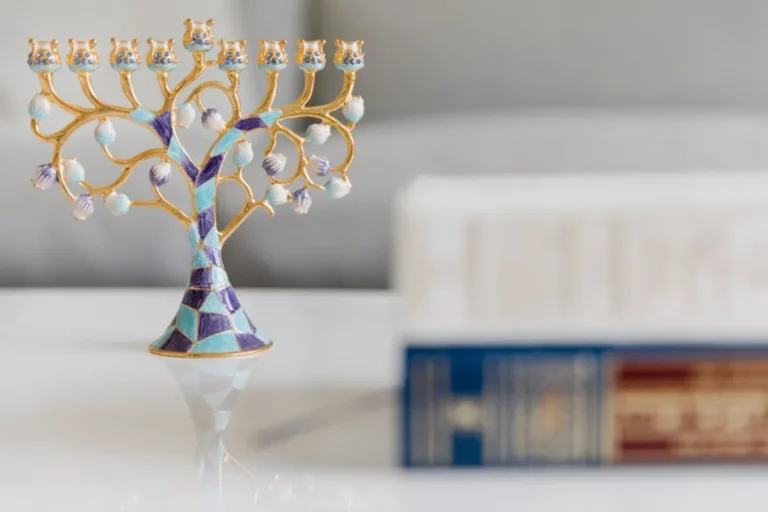

The Shabbat table — set for the Friday night meal that begins the Jewish Sabbath — represents specific intersection of Jewish practice, Jewish material culture, and Jewish family life. Across centuries, specific objects have come to belong on the Shabbat table. Each carries specific function and specific meaning.
The objects that belong on the Shabbat table deserve careful examination. The examination reveals substantial things about Jewish material culture and about how specific religious practices accumulate physical infrastructure across generations.
The basic objects
The Shabbat table includes specific objects with specific functions:
Candlesticks (shabbat licht). Two candles lit at sunset Friday by typically the woman of the household. The candlesticks themselves are substantial objects often inherited across generations.
Kiddush cup. Cup used for the blessing over wine that begins the meal. Kiddush cups range from simple to elaborate.
Challah cover. Cloth covering the bread before it's blessed. Often with embroidered traditional decoration.
Challah board or plate. Surface for the bread itself. Many include the traditional bread knife.
Wine bottle and decanter. Wine for the kiddush blessing.
Flowers. Traditional but not religious requirement.
The basic objects together establish the Shabbat table's religious and aesthetic character.
The blessing objects
Specific objects participate in the Shabbat blessings:
The candlesticks support the candles whose lighting marks Shabbat's arrival.
The kiddush cup holds the wine for the blessing that sanctifies Shabbat.
The challah board supports the bread for the blessing over food.
The challah cover is removed before the bread blessing — its presence signals Shabbat.
Together, these objects participate in the specific religious practice that defines Shabbat.
The objects aren't just decoration. They're part of the practice.
What makes Shabbat table objects substantial
Specific qualities distinguish substantial Shabbat table objects:
Quality materials. Sterling silver for substantial pieces. Quality ceramics. Substantial textiles. Quality woods.
Hand-craft. Hand-made pieces typically have substantial individual character.
Heirloom potential. Pieces designed for use across generations rather than disposable function.
Cultural appropriateness. Designs that integrate with Jewish aesthetic traditions.
Functional excellence. Objects that work well for their specific functions.
Aesthetic quality. Designs that bring beauty to the Shabbat table.
The combination produces objects worth substantial investment.
Building the Shabbat table over time
Many Jewish households build their Shabbat table inventory across years:
Initial pieces often come from family inheritance.
Wedding gifts substantially populate the Shabbat table for newer households.
Specific pieces are added for specific life events (birth of child, anniversary, etc.).
Pieces are added through gift-giving across years.
The cumulative collection develops across decades into substantial set.
The slow accumulation matches the long-term character of Jewish home life.
The candlestick question
Shabbat candlesticks deserve specific attention:
Two candles are traditional minimum. Some traditions use additional candles for additional family members.
Substantial candlestick traditions extend across centuries with specific stylistic variations across communities.
Sterling silver candlesticks are traditional substantial form. Other materials (brass, ceramic, mixed media) appear in specific contemporary work.
Heights and styles vary substantially. Specific family preferences develop across generations.
Substantial candlestick collections often reflect family history through specific pieces.
For new households, choosing candlesticks is significant decision affecting Shabbat aesthetics for decades.
The kiddush cup variations
Kiddush cups show substantial traditional variation:
Substantial silver kiddush cups remain traditional centerpiece.
Specific regional traditions (Eastern European, Sephardic, Yemenite) have distinctive forms.
Contemporary cups integrate traditional function with contemporary design.
Specific occasions (bar/bat mitzvah, wedding, milestone birthdays) often prompt specific cup gifts.
Family kiddush cups often pass across generations with substantial accumulated meaning.
For most households, the central kiddush cup is one of the most substantial Judaica investments.
The challah cover
The challah cover is often underappreciated:
Traditional embroidered covers represent substantial Jewish craft tradition.
Specific designs incorporate Hebrew text, Jewish symbols, traditional patterns.
Hand-embroidered covers from substantial makers are specific category worth investigating.
The cover provides substantial aesthetic element on the Shabbat table.
Quality covers handle generations of use.
For households building substantial Shabbat tables, the challah cover deserves attention beyond afterthought.
The challah board
The challah board (sometimes integrated with knife) varies substantially:
Wood boards from specific makers (olive wood, walnut, cherry) provide substantial substrate.
Integrated knife traditions add functional element.
Decorated boards with specific Jewish symbols extend the aesthetic dimension.
Family inheritance boards often have substantial accumulated character through years of use.
Boards withstand substantial use across years when maintained appropriately.
For practical Shabbat tables, substantial boards justify their cost.
Other table elements
Beyond core religious objects, Shabbat tables typically include:
Quality dinnerware substantially better than weekday plates.
Quality glassware appropriate for wine.
Specific table linens often reserved for Shabbat use.
Flower arrangements that complete the table's appearance.
Quality serving pieces for the meal itself.
The full table ensemble represents accumulated investment in Shabbat-specific items.
The contemporary versus traditional question
Households make specific choices about traditional versus contemporary:
Some households maintain primarily traditional aesthetics with classical forms.
Some integrate contemporary design substantially with traditional forms.
Some choose primarily contemporary work that incorporates traditional function.
Most households integrate elements from multiple eras and styles.
The choices reflect family aesthetic preferences and specific traditions.
No specific approach is more "correct" — different households make different choices appropriately.
The sourcing question
For households building Shabbat table inventory:
Substantial Judaica galleries. Specific galleries focus on quality Judaica with established maker relationships.
Direct from makers. Specific Judaica artists sell directly.
Religious institution shops. Some synagogues and Jewish institutions have substantial Judaica retail.
Israeli sources. Direct purchase from Israeli sources offers specific advantages.
Online specialty retailers. Specific online retailers focus on quality Judaica.
Auction and antique markets. Vintage and antique pieces offer specific opportunities.
Different sources suit different purposes within overall collection building.
What I prioritize for newer households
For people setting up Shabbat tables for the first time:
Quality candlesticks first. They're foundational and used weekly.
Substantial kiddush cup second. The central blessing object deserves substantial investment.
Quality challah board third. Heavy daily use justifies substantial piece.
Quality challah cover fourth. Often gift opportunity from family or friends.
Build dinnerware and glassware as financial situation allows.
Add flowers and accessories to complete the table.
The progression supports building substantial Shabbat table over years rather than all at once.
The maintenance question
Shabbat table objects require specific maintenance:
Silver pieces need periodic polishing.
Wood pieces need occasional oiling.
Textiles need careful washing or dry cleaning.
Ceramic pieces need normal pottery care.
The maintenance is part of Shabbat table tradition. The care extends piece life across generations.
Children often participate in maintenance, learning about specific pieces and their care.
Children and the Shabbat table
Children's engagement with Shabbat table objects:
Specific children's versions of objects support participation (smaller kiddush cups, etc.).
Specific objects often pass to children when households separate.
Children's connection with specific objects develops across years.
Specific objects acquire stories through family events involving children.
The intergenerational dimension of Shabbat table objects matters substantially.
Children's eventual inheritance of family pieces supports continuity across generations.
The traveling Shabbat table
For households that travel:
Specific portable Shabbat objects exist (folding candlesticks, travel kiddush cups).
Some households maintain specific travel sets distinct from home sets.
Family Shabbat traditions while traveling create specific memorable experiences.
The portability supports continued Shabbat practice across varied life situations.
For frequent travelers, substantial portable sets justify specific investment.
What the table represents
The Shabbat table represents substantial things:
Continuity of Jewish practice across generations.
Family connection through shared weekly ritual.
Cultural memory through accumulated objects with histories.
Aesthetic care for sacred time through substantial objects.
Hospitality tradition through specific guest accommodation.
The table is more than just dinner setting. It's active participation in Jewish religious and family life.
The honest summary
The Shabbat table represents specific intersection of Jewish practice, Jewish material culture, and Jewish family life. The objects that belong on it warrant substantial attention from households practicing Judaism.
For households building Shabbat tables, the framework supports specific decisions about what to acquire and what to prioritize. The investment pays back through years of weekly Shabbat use.
For Jewish material culture broadly, the Shabbat table provides specific context for craft tradition that contemporary purchases support.
For broader cultural appreciation, the Shabbat table demonstrates how specific religious practices accumulate physical infrastructure that supports continued practice across generations.
For new households starting their Shabbat tables, the decisions about specific objects affect Shabbat aesthetics for decades. Substantial investments in foundational pieces justify their cost across the long-term use.
The candles continue to be lit. The kiddush cup continues to hold the wine. The challah continues to be blessed and shared. The substantial objects continue to participate in the practice that has continued across many generations and continues across the generations that follow.
The work of building substantial Shabbat table goes on, in the long quiet rhythm by which Jewish families have built their tables across the centuries that Shabbat has been celebrated.
The pieces accumulate. The traditions persist. The Shabbat table continues, in the specific way that each Jewish family has chosen to develop it across the years of their practice.