Silver Judaica — the ceremonial and ritual objects of Jewish life made from silver — represents substantial Jewish craft tradition. The pieces include kiddush cups, candlesticks, menorahs, mezuzot, etrog boxes, Torah ornaments, and various other objects with specific religious functions.
Hand-made silver Judaica differs substantially from mass-produced alternatives. The differences are visible. They reveal substantial things about Jewish craft tradition and about what hand-made craft means more broadly.
The tradition
Silver Judaica has substantial historical depth:
Specific traditions extend back centuries across multiple Jewish communities.
Different regional Jewish communities developed specific styles — Polish-Jewish, German-Jewish, Sephardic, Yemenite, Persian, and various other regional traditions.
Mid-twentieth century Israeli silversmithing produced specific contemporary tradition that built on historical foundations.
Contemporary Israeli silversmithing continues to develop with specific contemporary styles.
The cumulative tradition represents substantial accumulated knowledge.
What hand-made pieces involve
Hand-made silver Judaica involves specific processes:
Sterling silver or higher purity (95-100% silver) shaped through specific traditional techniques.
Forming through hammering, raising, casting, or specific traditional methods.
Decoration through engraving, repoussé (raised relief), filigree, or other specific techniques.
Specific finishing including polishing, oxidation for contrast, and protective treatments.
Stone setting where traditional designs incorporate stones.
Specific hand-applied details that mass production can't replicate.
The processes accumulate substantial labor producing pieces that mass production economically can't match.
Mass-produced alternatives
Mass-produced silver Judaica involves different processes:
Stamping and casting in volume rather than hand-forming.
Mechanical decoration rather than hand-engraving.
Standardized designs produced repeatedly with minimal variation.
Often lower silver content (silver-plated rather than solid silver) with substantially less material value.
Substantial price differential reflecting both lower material content and lower labor.
The pieces look superficially similar to hand-made but reveal substantial differences on close examination.
What distinguishes hand-made pieces
Specific characteristics distinguish hand-made silver Judaica:
Individual variation. Each hand-made piece has specific small differences from other examples. The variations are part of the character.
Substantial silver weight. Hand-made pieces typically use substantial sterling silver rather than thin plating.
Hand-applied decoration. Specific tool marks from hand-engraving produce textures that mechanical decoration can't replicate.
Maker's marks. Hand-made pieces typically include maker's marks identifying the silversmith.
Quality of fitting. Hand-made pieces have specific fitting and finishing details that mass production typically lacks.
Patina development. Hand-made pieces develop substantial patina across years of use that produces specific character.
The distinctions are visible to attentive examination.
Specific Israeli silversmiths
Israeli silversmithing has specific significant history:
The Bezalel Academy of Arts and Design produced specific influential silversmithing tradition starting in the early 20th century.
Specific generations of Israeli silversmiths have produced substantial work across the past century.
Contemporary Israeli silversmiths combine traditional techniques with contemporary design sensibilities.
Specific workshops continue traditional methods while developing new applications.
The cumulative Israeli silversmithing tradition has substantial depth worth understanding.
The economic reality
Silver Judaica economics involve specific factors:
Hand-made pieces cost substantially more than mass-produced alternatives. A hand-made kiddush cup might cost $400-2000+ versus $50-200 for mass-produced.
The price differential reflects material cost (substantial sterling silver) plus labor cost (substantial skilled work).
The differential is real and substantial. Hand-made Judaica is meaningful investment.
The pieces generally appreciate or hold value rather than depreciating like mass goods.
Family heirloom potential is substantial for hand-made pieces.
The economics warrant honest evaluation rather than assumptions either direction.
What buyers should look for
For people considering substantial silver Judaica purchases:
Sterling silver content. Look for ".925" mark indicating sterling silver. Plated silver is substantially different category.
Maker's marks. Identifiable maker's marks indicate hand-made production by specific silversmith.
Substantial weight. Hand-made pieces typically have substantial weight reflecting solid silver construction.
Quality of detail. Hand-engraving and hand-applied decoration reveal substantial craft.
Reputable provenance. Established workshops, recognized galleries, and verified retailers reduce risk of misrepresentation.
Documentation. Substantial pieces should come with documentation of provenance and silversmith.
Informed buying enables better long-term value than impulse purchasing.
Care of silver Judaica
Hand-made silver Judaica requires specific care:
Periodic polishing to maintain appearance. Modern non-abrasive silver polishes work well.
Storage in tarnish-resistant materials reduces polishing frequency.
Avoid prolonged contact with sulfur-containing materials (some woods, certain papers).
Hand-wash after religious use to maintain ceremonial appropriateness.
Substantial pieces may benefit from professional cleaning periodically.
Care extends piece life across generations.
Specific Judaica categories
Different Judaica categories warrant specific attention:
Kiddush cups. Substantial central piece used regularly. Hand-made versions are notably different from mass-produced.
Candlesticks. Sabbath candlesticks have specific traditional forms. Hand-made versions reveal substantial individual character.
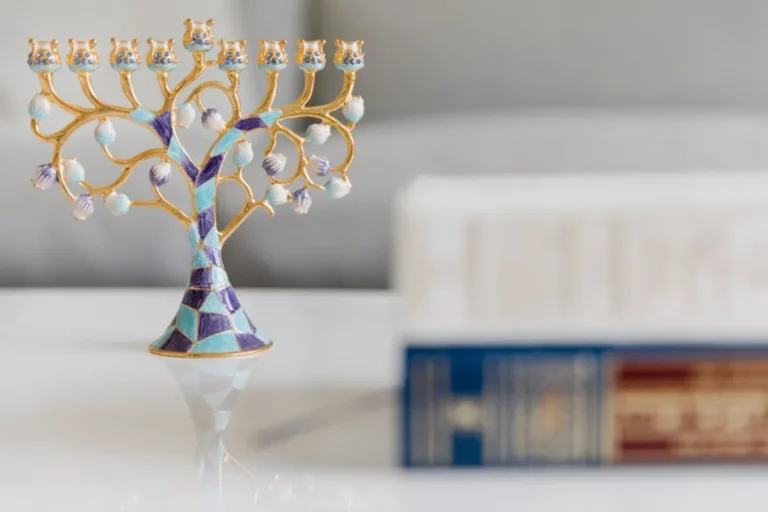
Menorahs. Hanukkah menorahs (chanukkiot) come in substantial variety. Hand-made versions can be substantial decorative pieces.
Mezuzot. Doorpost cases with specific traditions. Hand-made versions integrate craft with religious function.
Torah ornaments. The most substantial Judaica category — Torah crowns, Torah pointers, Torah covers. Substantial hand-made tradition.
Etrog boxes. Sukkot-specific containers with specific traditional decoration patterns.
Each category has specific traditional development worth understanding.
The specific maker relationship
Hand-made silver Judaica often involves direct relationships with makers:
Commissioned pieces allow specific customization.
Direct workshop visits provide specific maker engagement.
Specific galleries representing specific makers facilitate ongoing relationships.
The relationships add substantial value beyond just the objects.
For substantial pieces, direct maker engagement is often appropriate.
What happens to pieces across generations
Quality silver Judaica accumulates substantial meaning across generations:
Pieces inherited from parents and grandparents carry specific family connections.
Pieces used at significant family events accumulate ceremonial associations.
Pieces purchased for specific life events (weddings, bar/bat mitzvahs) have specific meanings.
Pieces commissioned for specific occasions have substantial personal connections.
The accumulated meaning multiplies the pieces' significance beyond their individual character.
Hand-made pieces hold value across generations in ways mass goods don't.
The international Judaica market
The international Judaica market includes:
Substantial Israeli production reaching international Jewish communities.
Specific American, European, and other Jewish silversmiths producing within local Jewish communities.
International galleries specializing in Jewish craft.
Online marketplaces with substantial variation in quality and authenticity.
Specific museum collections demonstrating substantial historical and contemporary work.
The market provides substantial access for interested buyers globally.
What I recommend
For people building substantial Judaica collections or making specific significant purchases:
Buy from established sources with substantial reputations.
Build relationships with specific silversmiths or galleries over time.
Start with one substantial piece rather than multiple lesser pieces.
Document purchases substantively for future reference.
Use the pieces ceremonially. Display alone misses substantial value.
Plan for generational continuity. Pieces should outlast their initial purchasers.
Consider commissioning when specific life events warrant. Custom pieces have substantial meaning beyond off-the-shelf alternatives.
The recommendations support substantial Judaica engagement that produces lasting value.
What concerns me
Specific concerns about contemporary Judaica market:
Mass-produced "Judaica" with limited Jewish craft connection sometimes claims authenticity it doesn't deserve.
Online marketplaces include substantial misrepresented work.
Cost pressures push some producers toward shortcuts that affect quality.
Generational transitions in some workshops create discontinuity risks.
Tourist-focused production sometimes lacks substantial craft values.
The concerns warrant care in purchasing decisions but don't undermine the substantial work that does continue.
What gives me hope
Substantial things support continued silver Judaica tradition:
Specific silversmiths in Israel and elsewhere continue substantial work.
Younger silversmiths are entering the field with specific contemporary perspectives.
Buyer interest in substantial pieces remains real.
Religious and cultural commitments support continued demand.
Specific institutions (galleries, museums, religious organizations) support the tradition substantively.
The continuation conditions remain in place though require ongoing engagement.
The honest summary
Hand-made silver Judaica represents substantial Jewish craft tradition with specific characteristics warranting attention. The differences from mass-produced alternatives are real and substantial.
For people building Jewish material culture in their homes, hand-made Judaica offers specific value beyond function. Religious meaning combines with craft achievement to produce substantial objects.
For Jewish craft tradition broadly, continued buyer interest in substantial work supports continued production. The tradition continues because of decisions to support it.
For people considering specific purchases, the framework supports better decisions. Recognizing what makes pieces substantial enables informed engagement.
For broader cultural appreciation, substantial Judaica represents specific craft achievement worth respecting alongside other substantial cultural traditions.
The work continues. The silversmiths persist. The pieces accumulate meaning across generations. The substantial Judaica tradition continues through specific commitments at multiple levels — makers maintaining craft, buyers supporting work, institutions sustaining context.
For those who engage with it, the tradition produces substantial reward across decades of family Jewish life. For those who haven't engaged, the tradition remains accessible.
The candles will be lit. The blessings will be said. The cup will be raised. The pieces that participate in these moments matter substantially for what those moments become.